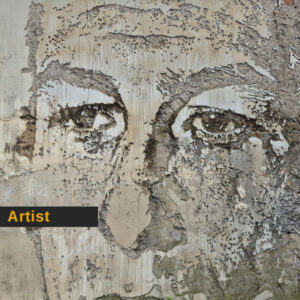
Between Bohemian Heritage and the Contemporary Voice of Paris
Montmartre, the hill of artists in Paris, is where it all began, not only for street art but for the very idea of creative freedom in public space. Long before words like “graffiti” or “street art” entered the vocabulary, artists such as Picasso, Toulouse-Lautrec, Modigliani, and Dalí wandered these streets, painting, drinking, loving, and rewriting the history of modern art.
Today, though the world has changed, the streets of Montmartre remain faithful to that same spirit, freedom, self-expression, and a constant collision between old and new.
Between Pastoral and Rebellion
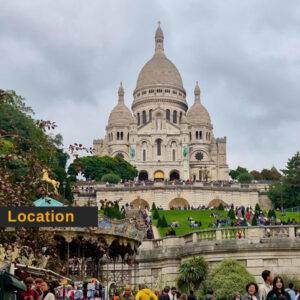
The streets of Montmartre can be deceiving. At first glance, they look like a postcard of Paris, houses with green shutters, quiet squares, winding staircases leading up to the white Sacré-Cœur Basilica. Yet behind this picturesque façade lies a neighborhood that continues to embody independent and rebellious creativity.
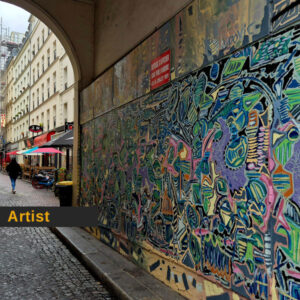
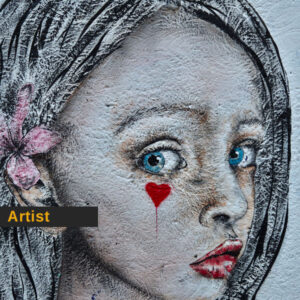
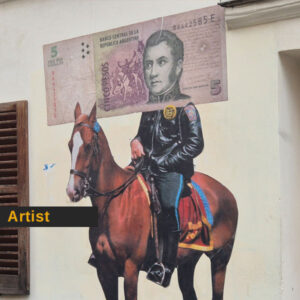
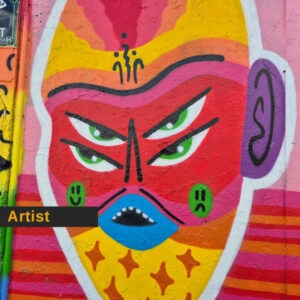
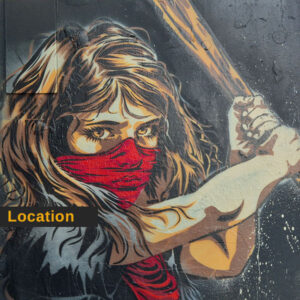
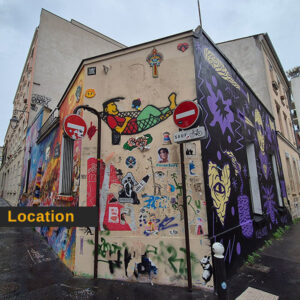
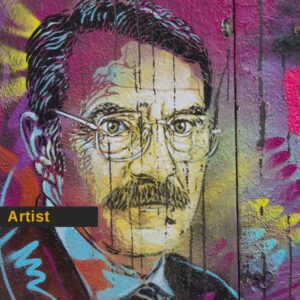
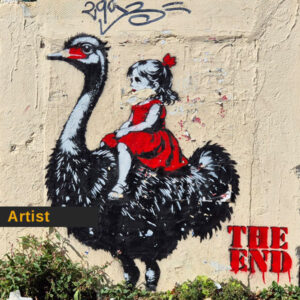
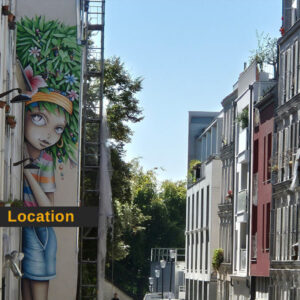
Walls along Rue Lepic, Rue des Trois Frères, Rue Véron, and Rue Androuet are filled with paste-ups, stencils, small paintings, and artist tags – some by local creators, others by international names. Here, on the same walls that once witnessed Toulouse-Lautrec, a new urban language emerges: colorful, direct, sometimes political, and sometimes poetic.
Between Authenticity and Tourism
Today, Montmartre is one of Paris’s most visited destinations. Millions of tourists arrive each year, bringing with them commerce, souvenir shops, and polished cafés. Yet amid the markets and cameras, street art still survives. Sometimes it’s a side wall behind Place du Tertre, sometimes a small graffiti piece on a mailbox, fleeting moments of resistance in a sea of tourism.
Many artists address this tension directly. The dialogue between street art and tourism raises a fundamental question about ownership, who really owns the public space of Montmartre?
Street Art Tours in Montmartre
In recent years, guided tours dedicated solely to Montmartre’s street art have become increasingly popular. Local guides and photographers invite visitors to look at the walls anew, not just to take photos but to understand the visual language, the context, and the stories behind each figure and signature.
These tours often take visitors beyond the main square, into hidden alleys where one can find ever-changing works, political graffiti, feminist art, and creations by young, anonymous artists who paint by night.
Between Past and Future
What makes Montmartre so unique is its poetic tension between a romantic bohemian past and a vibrant urban present. Once the stronghold of painters and cabaret artists, it is now home to street artists and graffiti writers. The style may have changed, but the spirit remains the same – art born of freedom, of the urge to tell a story, and of the belief that every wall has something to say.
Conclusion
Street art in Montmartre is not merely a continuation of the neighborhood’s artistic history – it is its new incarnation. While Picasso and Dalí once sought freedom in their studios, today’s street artists find it on the walls.
They speak a different language, use different colors, but carry the same timeless idea: that true art does not emerge from institutions, but from the deep human desire to speak to the world.
Among the artists whose works appear in the series of posts on street art and graffiti in Paris: SETH (Julien Malland), C215 (Christian Guémy), Vhils (Alexandre Farto), KASHINK (Maëva Martinez), Vale_Stencil (Valérian Lenud), The Pop Suréalist, The End of Animals (THE END), L’Empreinte Jo V (La Dactylo), IPDO (I Pixel di Oplontis), Mathieu 1976 (Mathieu Dussaucy), DJERADI LUDOVIC (Ludovic Djeradi), JR, Invader, Miss.Tic, Jef Aérosol, Blek Le Rat, Speedy Graphito, Hopare, Astro, Ardif, Ludo, Levalet (Charles Leval), Jo Di Bona, Monsieur Chat (Thoma Vuille), Zevs, Combo CK (Combo Culture Kidnapper), Alëxone Dizac, Tilt, Lek & Sowat, L’Atlas, Romain Froquet, Philippe Baudelocque, Jérôme Mesnager, Vinie Graffiti, Kalouf, Maye, A-MO, Clet Abraham, OakOak, Ender, Mosko et Associés, Codex Urbanus, Ella & Pitr, Dourone, Shaka (Marchal Mithouard), Raphael Federici, Pboy, Sismikazot, Kurar, Gregos, Tarek, Jace, Nasty, Doudou Style, FKDL, RNST, Zepha, Jerk 45, Onemizer, Bault, Polar Bear, Céz Art, Guy Denning, SP38, Zeer, Dume, Tanc, Kaldea, Antistatik, Reso, Woizo, MadC, Jober, Abys, Guaté Mao, Psyckoze, MonkeyBird Crew, Mantra, Aude Villerouge, Loraine Motti, Jean Faucheur, Jibé, Bom.K, Gris1, Aéro, JBC, Le MoDuLe De ZeeR, D*Face, Shepard Fairey, Banksy, 2Shy, Aroe, Babs, Bates, Brusk, Can2, Case Maclaim, Chanoir, Create, Darco, Dize, Gyz, Insane 51, Jaba, Jonone, Katre, Marko 93, Noé2One Mizer, Pro176, Remio, Schuck2, Snake, T-Kid, Tony Noel, Vision, Zenoy
Street Art in Le Marais Paris
Street Art Along Canal de l’Ourcq
LUDOVIC – Urban Chaos
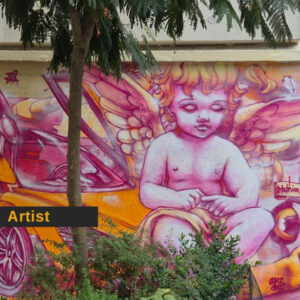
Mathieu 1976 – Angels in Paris
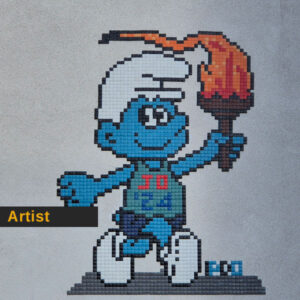
IPDO – The Smurfs on the Wall
The Women of L’Empreinte Jo V
The Pop Suréalist
KASHINK – Paris’ Female Voice
Spot 13 – Paris
La Promenade Plantée – Paris
Street Art Avenue Paris
Street Art in Montmartre
The Giant Mural Project in Paris
THE END OF ANIMALS
The Belleville Character
VHILS – Carved in Stone
59 Rivoli – Alternative Art in Paris
The Children of SETH
Vale_Stencil – Colorful Stencil Art