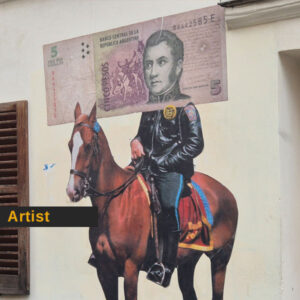
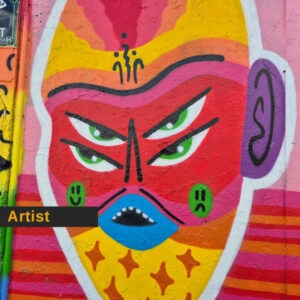
A Change in the Language of the Street
Since October 7, the language of street art in Israel has changed profoundly in the way it affects public space. The walls no longer deal only with aesthetics, identity, protest, or humor. They have become surfaces carrying pain, longing, mourning, remembrance, solidarity, and hope.
In Israel, street art has always reflected reality in real time, but during the war it received an additional role – emotional and memorial documentation of a society in trauma.
Israeli street art after October 7 reveals how cities absorb trauma visually. It shows how walls become witnesses. And perhaps most importantly, it demonstrates how art in public space can help people mourn together in moments when words alone are not enough.
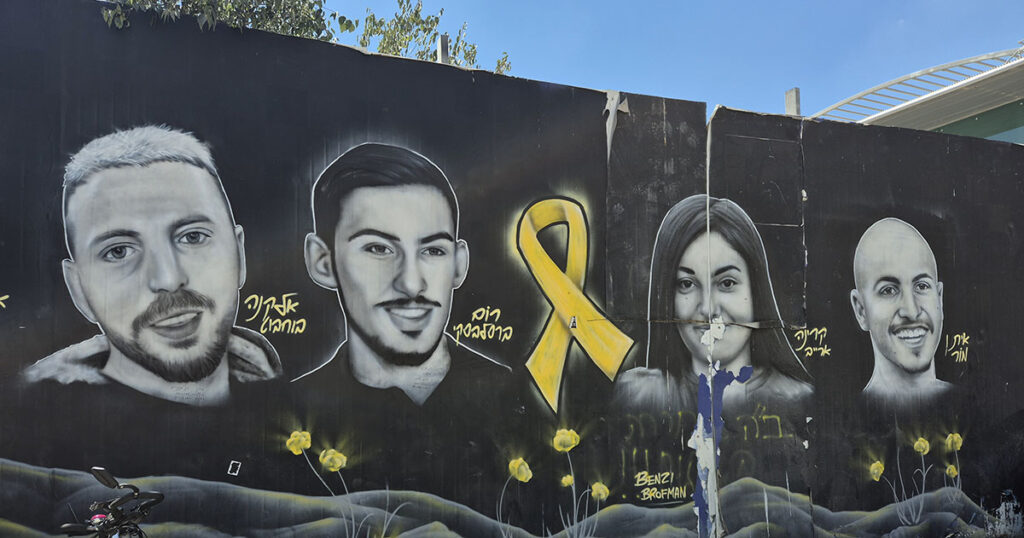
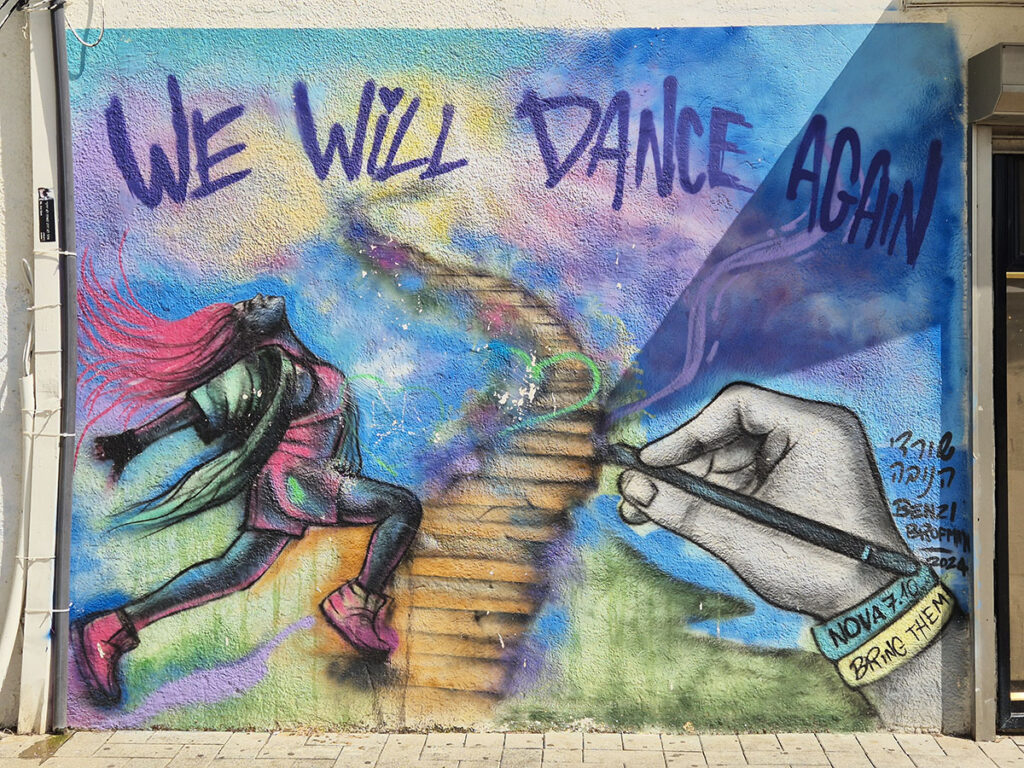
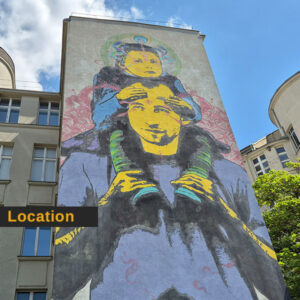
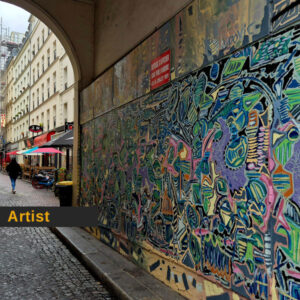
In the picture above, part of a large work by artist Benzi Bronfman in Haifa, Israel
Bereavement as a Cultural Layer (for International Context)
For international readers, it is important to understand that bereavement in Israeli society carries a particularly deep and complex cultural meaning. Due to mandatory military service, repeated wars, terror attacks, and the small size of the country, loss is rarely experienced only as a private family tragedy. The Hebrew term “shkhol” (bereavement after losing a loved one in war or terror) is woven deeply into Israeli culture and collective memory. Many Israelis personally know someone who was killed, injured, kidnapped, or directly affected by violence. As a result, mourning often exists simultaneously on both the personal and national levels.
This cultural reality is reflected powerfully in the streets.
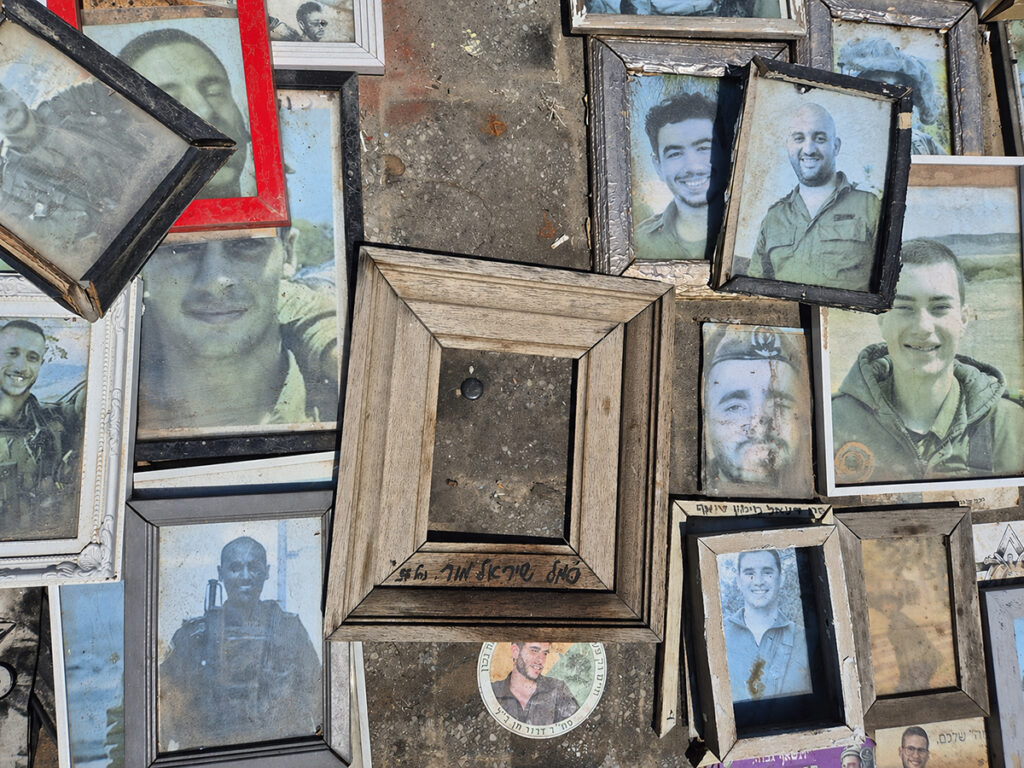
In the picture above, a work by Benzie Bronfman depicting 4 of the October Seven hostages.
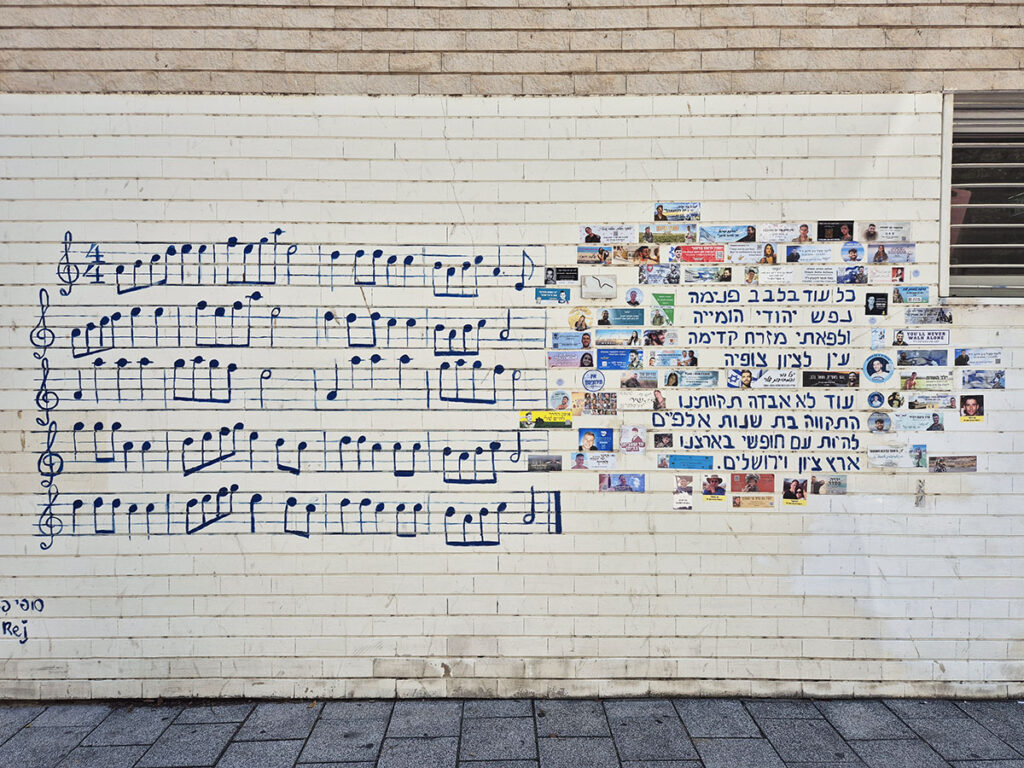
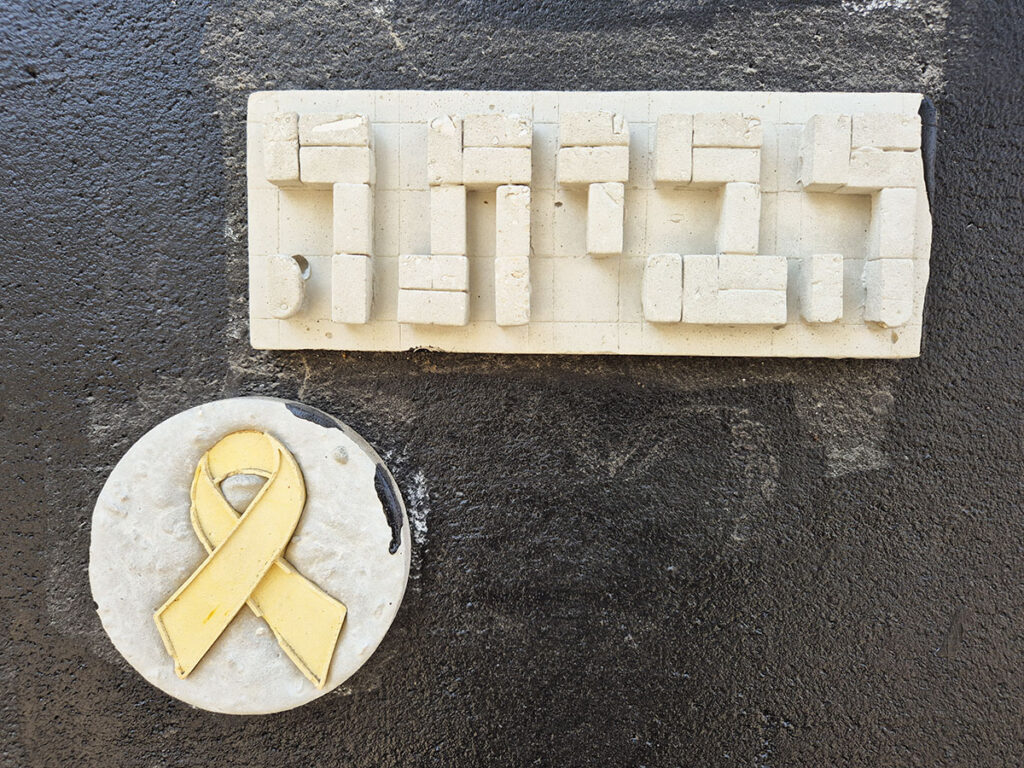
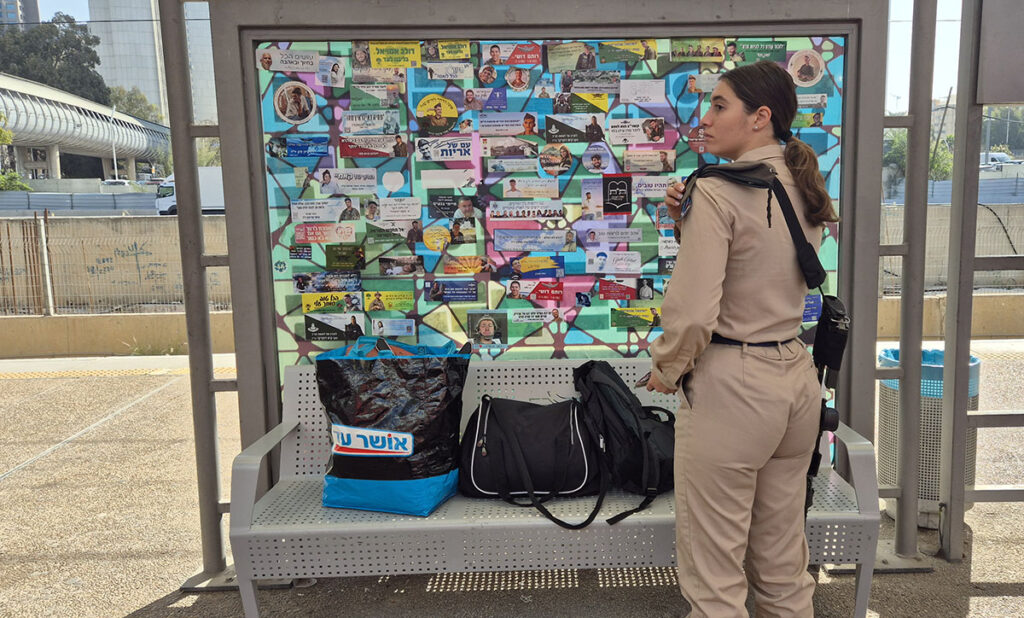
In the picture above, the anthem “Hatikva” was written with the words and notes. Throughout the war, stickers of fallen soldiers were added to it.
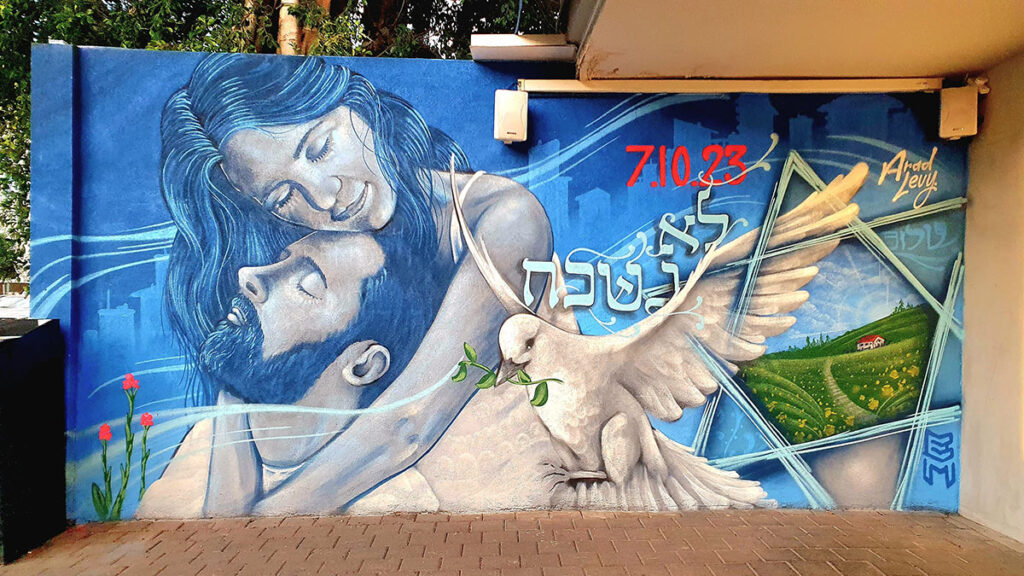
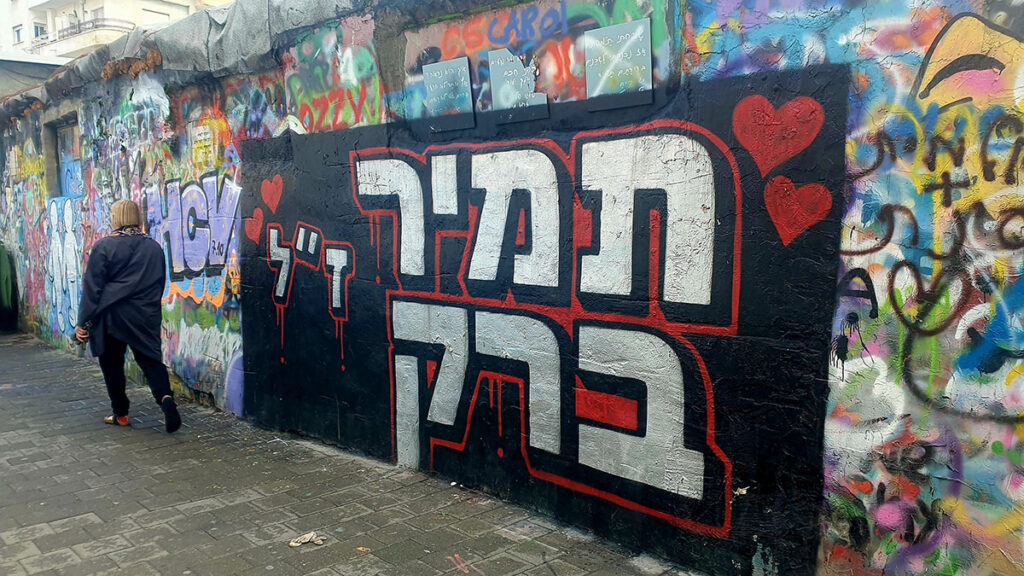
In the picture above, street work by Arad Levi in Tel Aviv created a few months after the start of the war
The Street as a Memorial Space
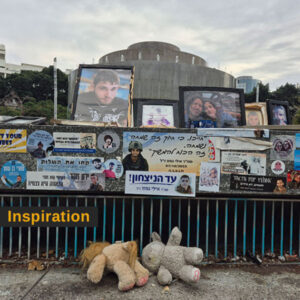
The works appearing throughout Israeli cities are not created only by professional artists. Some are painted by friends, family members, reserve soldiers, design students, or anonymous passersby. Alongside large murals, countless memorial stickers appeared bearing the faces and names of the murdered, the fallen soldiers, and the hostages. Entire walls became improvised memorial spaces.
The street became a place where people could stop, look, cry, remember, and leave messages.
In the picture above, a tag that says “I miss you” (created in a civic project of bereaved women)
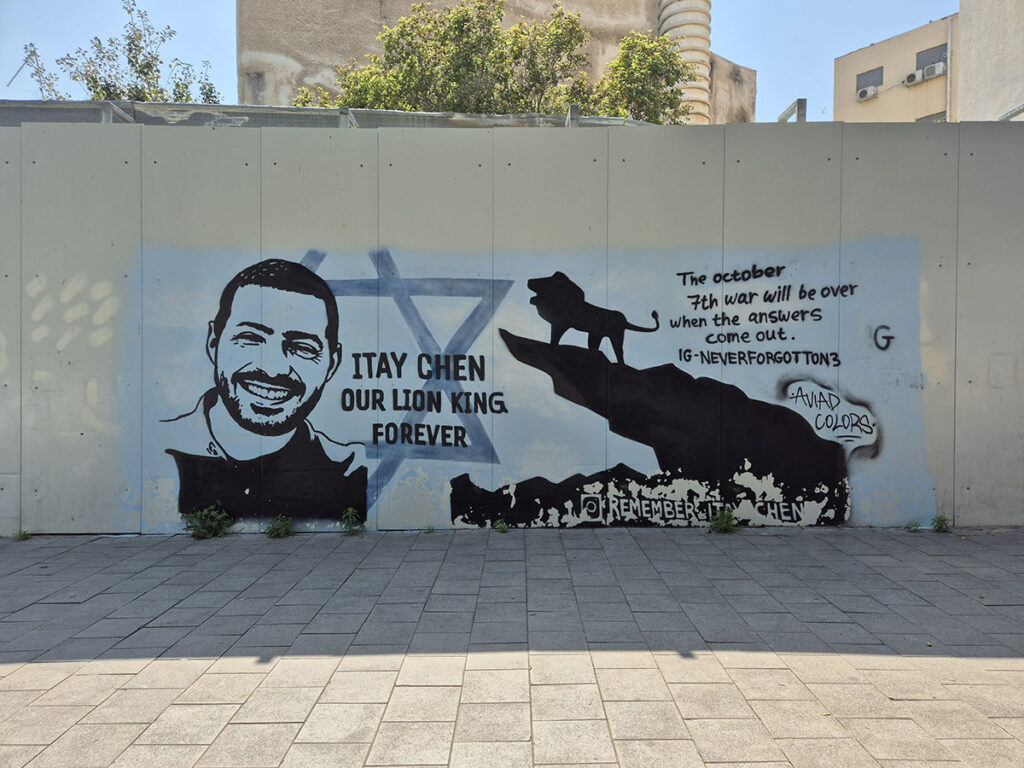
In the picture above, street work by Arad Levi in Tel Aviv created a few months after the start of the war
Between the Institutional and the Spontaneous
Unlike official monuments or institutional memorial ceremonies, street art allows grief to remain raw, immediate, emotional, and unresolved. It does not wait for historical distance. It reacts in real time.
Many of the works created since the beginning of the war combine symbols from Israeli culture together with universal human emotions: broken hearts, flowers, angels, candles, yellow ribbons, portraits, embraces, prayers, and handwritten messages. Some works express rage and protest, while others focus on tenderness, longing, unity, and memory.
In the picture above, a tag that says: “Tell me… have you dreamed about him yet?” (created in a civic project of bereaved women)
In the picture above, “Memorial Bench” on Dzengoff Street, Tel Aviv, in memory of the fallen soldier Or Aschar with the quote “If you can dream it, you can do it”
In the picture above, a tag that says “Do you hear? I loved him more than my own” (created in a civic project of bereaved women)
Stickers as a Living Mechanism of Memory
Within all of this, the stickers occupy a particularly central place. They are small, inexpensive, easy to print quickly, and simple to distribute widely. Anyone can paste them, anyone can take part. No professional skill is required, no permission is needed. There is something very modest about them. They are not large, not impressive, and they do not demand special attention. Yet precisely because of this, they are everywhere. They do not need the “right wall.” Any surface is enough.
They are temporary. They peel, tear, and fade. They are not meant to last forever. And precisely because of that, they carry the moment within them. They do not try to commemorate “for eternity” – they seek to be present now. They function like pulses. Each sticker is a moment. Each layer is time. Together they create a sequence, a movement, a living memory that is constantly updating. And that gives them a completely different kind of power.
One of the strongest mechanisms that developed around the stickers is the way they are distributed. Not through a central body or an organized initiative, but through close human circles. A victim’s family prints a sticker, and from there it moves outward: to high school friends, army friends, relatives. Each of them carries a small bundle of stickers in their bag, available for the right moment – for an opportunity to paste, to leave a mark, to add another point on the map.
This is how a quiet but very wide wave is created. The same sticker, the same face, the same name – appearing again and again in different places, in different cities, sometimes even in other countries. This is not only an act of commemoration, but a movement. A human network that spreads memory through space, layer by layer, until it no longer belongs only to the immediate circle, but becomes a public presence, almost universal.
Stickers of victims and the fallen are not a memory of what was. They are part of what is happening now.
A Change in Visual Language
The visual language itself also changed. More portraits began appearing in public space. More realistic faces. More names. More direct emotional messages. In many cases, the aesthetic sophistication became secondary to the emotional urgency.
Street Art as Testimony
Street art after October 7 is therefore not only an artistic phenomenon. It is also social testimony.
The walls document what people felt in moments when language itself often became insufficient. They preserve temporary emotions, spontaneous memorials, and public reactions that may disappear physically over time but remain deeply meaningful culturally and emotionally.
A Living Archive in Public Space
Israeli street art during the war demonstrates how public space can transform into a living archive of collective memory. It shows how cities absorb trauma visually, and how art can become a tool for remembrance, emotional expression, solidarity, and human connection during periods of uncertainty and pain.
In the picture above, a tag that says “Permitted for publication – I am a walking pain (created in a civic project of bereaved women)
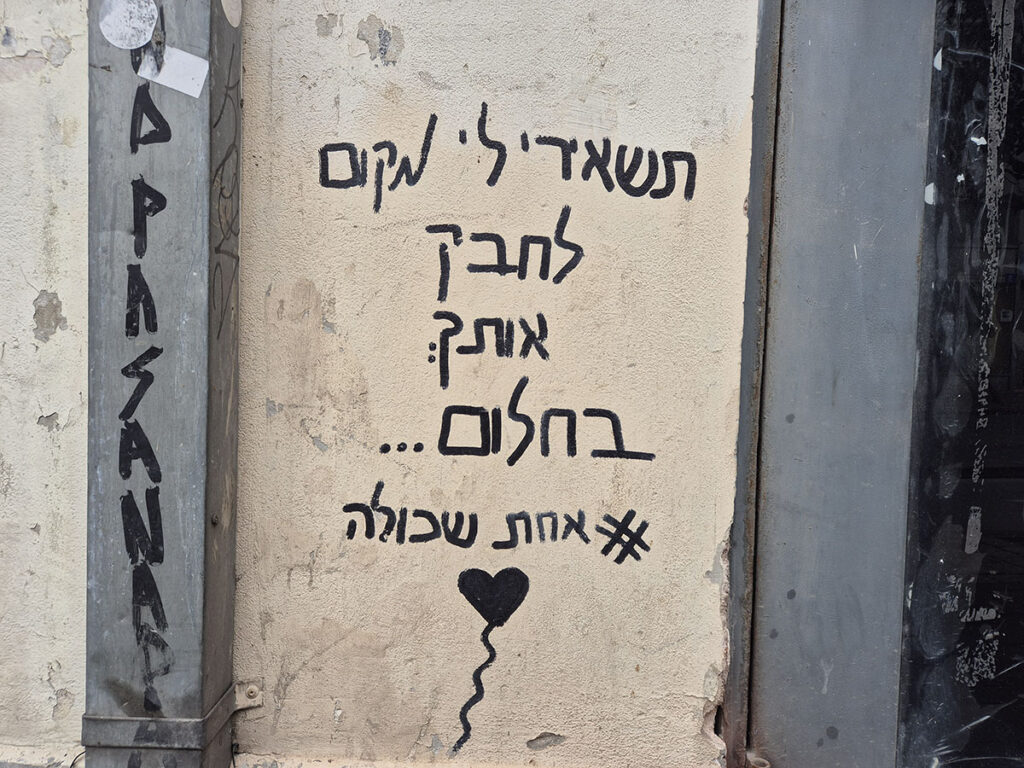
In the picture above, a tag that says “Leave room for me to hug you in my dream.” (created in a civic project of bereaved women)